
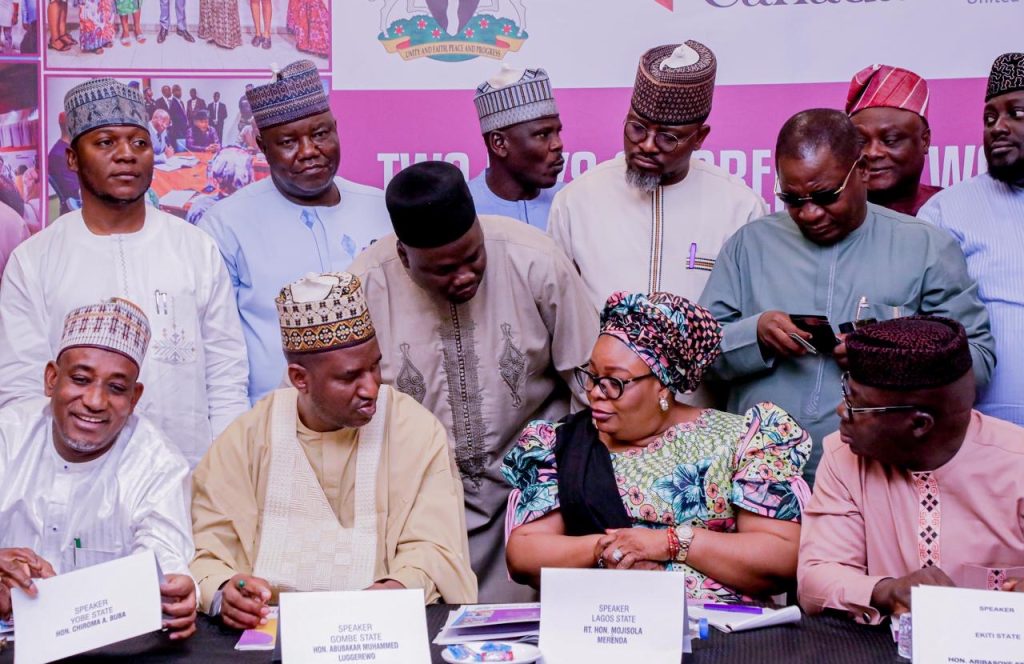
The Lagos State House of Assembly has reaffirmed its commitment to supporting legislative frameworks that promote equity and inclusion in society.
Rt. Hon. Mojisola Lasbat Meranda, Speaker of the Lagos State House of Assembly, made this pledge on Friday while delivering a special remark at the Women Advocates Research & Documentation Centre (WARDC) Co-creation Workshop held at Protea Hotel, Lagos.
Meranda emphasized that the workshop would help shape an instrument that serves as a moral compass for society.
“Today, we are shaping a transformative instrument that will serve as a moral compass for our society—a bill that seeks to address and dismantle systemic inequalities that have long excluded vulnerable groups,” she stated.
Describing the workshop as a significant milestone in Nigeria’s journey toward fostering a more just, equitable, and inclusive governance structure, Meranda stressed the need for systemic change.
She noted that despite Nigeria being Africa’s most populous nation and largest economy, with over 250 ethnic groups and rich cultural diversity, this diversity has not always translated into equity and inclusion.
“Marginalized groups, including women, low-income individuals, persons with disabilities, and ethnic minorities, continue to face systemic barriers that restrict their access to opportunities, resources, and representation. Women, for instance, are significantly underrepresented in political leadership and decision-making roles, holding only a small fraction of elective positions. Similarly, persons with disabilities encounter immense challenges in education, employment, and access to public services,” she explained.
Citing the World Economic Forum’s Global Gender Gap Report 2024, Meranda highlighted Nigeria’s ranking of 125th out of 146 countries in gender parity, particularly in economic participation and political empowerment. She underscored the urgency for legislative intervention and policy transformation.
She further pointed out that individuals in rural areas, urban slums, and economically disadvantaged communities struggle daily to access basic amenities and economic opportunities, making it imperative for policymakers to address these pressing issues.
As a way forward, Meranda advocated for increased training and financial support for women, youth, and persons with disabilities to empower them economically and socially.
She also disclosed that the Lagos State Legislature has been proactive in championing inclusion and diversity through progressive legislation and advocacy, reaffirming its dedication to building a more equitable society.
I’ve refined the structure and clarity of your news story while maintaining its key messages. Let me know if you’d like any further adjustments.
