
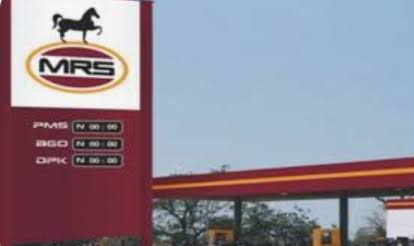
Motorists in Lagos are increasingly patronising MRS Oil filling stations following the commencement of petrol sales at ₦739 per litre, a move linked to a significant reduction in the ex-depot price by the Dangote Petroleum Refinery.
The new pump price, observed in areas such as Alapere and other parts of Lagos, represents a sharp decline from the previous range of over ₦800 to as high as ₦970 per litre at many retail outlets. However, the lower price is not uniform across locations. In neighbouring Ogun State, particularly along the Mowe–Ibafo axis of the Lagos-Ibadan Expressway, some MRS stations were still selling petrol at about ₦875 per litre, citing higher logistics and distribution costs.
The development follows Dangote Refinery’s decision to slash its gantry price from ₦828 to ₦699 per litre for marketers lifting a minimum of 10 truckloads. President of the Dangote Group, Aliko Dangote, has also reiterated his intention to enforce a nationwide pump price ceiling of around ₦740 per litre, accusing some marketers of exploiting consumers through inflated pricing.
“Marketers who can lift at least 10 truckloads will buy PMS at ₦699 per litre,” Dangote said, adding that pump prices approaching ₦970 per litre were unjustifiable under the new pricing structure.
The revised gantry price has sparked intense activity at the Dangote Refinery’s Lekki loading depot, with long queues of trucks and independent marketers from across the country rushing to load products.
However, the aggressive pricing strategy has attracted criticism from industry stakeholders.
The National President of the Petroleum Products Retail Outlets Owners Association of Nigeria (PETROAN), Billy Gillis-Harry, described the situation as a “dirty price war,” warning that it could undermine the Petroleum Industry Act (PIA) 2021, which promotes market-driven pricing.
He noted that independent marketers could incur losses estimated at ₦80 billion, while petrol importers may face monthly losses of about ₦102 billion. Dangote Refinery, he added, is reportedly absorbing roughly ₦91 billion monthly to sustain the reduced prices.
Despite the concerns, analysts believe the development could help stabilise fuel prices in the medium term if supply remains steady, offering some relief to consumers, especially during the festive season.
Other retail partners of the Dangote Refinery are also expected to follow MRS in adjusting pump prices downward, a move that could significantly reshape Nigeria’s downstream petroleum sector.
