
By Amdrew Akor
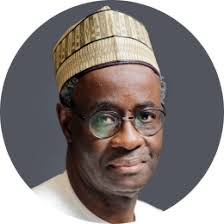
Tanimu Yakubu, Director General of the Budget Office of the Federation, has emerged as a central figure in Nigeria’s public financial management landscape—an institutional reformer whose career has consistently fused macroeconomic insight with operational discipline. Since assuming office, he has redefined Nigeria’s budgeting architecture, embedding transparency, policy coherence, and institutional accountability into the heart of the federal fiscal process.
A seasoned technocrat with extensive experience as Commissioner for Finance, Budget, and Economic Planning in Katsina State (1999–2002) and as Chief Economic Adviser to President Umaru Musa Yar’Adua, Tanimu brings a uniquely integrative understanding of public finance—from subnational fiscal strategy to sovereign economic planning. His tenure at the Budget Office marks a return to first principles: restoring credibility, reasserting control, and retooling the budget as both a development and stabilization instrument.
Strategic Overhaul of the Budgetary Process
Under his leadership, the Budget Office has undergone a substantive shift from a narrow appropriation-processing agency to a policy-focused fiscal authority. He has championed the institutionalization of the Medium-Term Expenditure Framework (MTEF) as a credible fiscal anchor, linking budget plans to national development objectives while ensuring alignment with macroeconomic realities. Through enhanced inter-agency coordination and early budget call circulars, the office under his watch has ensured the timely preparation and enactment of annual appropriation laws—most notably achieving passage of the 2025 Appropriation Act before the close of 2024.
This level of timeliness, transparency, and technical rigour had been elusive for decades. Tanimu’s reforms have not only restored credibility to the national budget process but have also improved investor confidence, credit rating dialogue, and fiscal predictability across MDAs.
Fiscal Discipline, Monitoring, and Compliance
A cornerstone of his administration has been the enhancement of post-appropriation control mechanisms. Recognizing that appropriations without accountability are hollow, he strengthened the monitoring and evaluation (M&E) architecture within the Budget Office, introducing real-time capital budget performance tracking and outcome-based reporting frameworks. This has curtailed the incidence of abandoned projects, misallocated resources, and opaque fund utilization.
He has further championed the integration of digital monitoring dashboards, ensuring that disbursements and physical project progress are reconciled regularly—thus enabling proactive decision-making by the Presidency, National Assembly, and fiscal authorities.
Budgeting as a Development Strategy
Beyond technical reforms, Tanimu has repositioned the budget as a platform for national development and economic renewal. In close collaboration with the Federal Ministry of Finance and the Office of the President, he led the articulation of a triple-budget approach for the fiscal year: the 2024 Main Budget, a targeted 2024 Supplementary Budget, and the early preparation of the 2025 Budget—all seamlessly integrated to finance priority projects under the Renewed Hope Agenda.
He also supervised the revival of Nigeria’s GDP rebasing process, a move long delayed, but one that is foundational for accurate macroeconomic planning, sectoral targeting, and sovereign risk pricing. This initiative has not only improved the integrity of public data but also attracted renewed interest from international development partners and private sector investors.
Sectoral Impact and Cost-Efficiency
In line with President Tinubu’s focus on agriculture and energy security, Tanimu ensured timely release and efficient tracking of funds to critical sectors. His interventions in the upstream oil sector, including fiscal policy dialogue with the NNPC and Ministry of Petroleum Resources, have contributed to lower cost-per-barrel benchmarks and increased production efficiency. Similarly, his structured intervention in agriculture financing—especially fertilizer and mechanization subsidies—has supported food system stability and helped cushion inflationary pressures.
Furthermore, through rigorous forecasting and a newly instituted fiscal risk framework, he has improved variance analysis and scenario planning within the Budget Office, yielding greater predictability in revenue and expenditure trends. The office now operates with a 90% accuracy rate in key fiscal indicators—an unprecedented achievement.
Human Capital and Institutional Resilience
Tanimu has not only focused on numbers and institutions but also on the people behind them. He introduced performance-based incentives, inter-agency technical secondments, and continuous professional development for staff, fostering a culture of excellence and cross-functional collaboration. The integration of skilled professionals from planning, finance, and audit backgrounds into the Budget Office ecosystem has expanded its capacity and operational depth.
Recognizing the centrality of ICT, he oversaw the digitization of budget workflows, internal audit processes, and stakeholder dashboards. These tools have improved transparency, reduced leakages, and elevated the Office’s capacity to deliver on its mandate.
Stakeholder Engagement and Development Partnerships
Tanimu’s quiet diplomacy and policy clarity have reenergized Nigeria’s engagement with international development partners. His efforts have unlocked greater programmatic funding from multilateral partners like the World Bank, AfDB, and bilateral agencies, anchored on fiscal responsibility, verifiable outcomes, and sectoral alignment.
He has also deepened National Assembly engagement, emphasizing their constitutional role in appropriation and oversight while building trust through timely submissions, data transparency, and joint project inspections. His strategic communication with state governments has improved vertical coordination, enabling better implementation of federally funded capital projects at the subnational level.
⸻
Conclusion: A Fiscal Steward for a New Era
In an age of constrained revenues, complex global headwinds, and rising citizen demands, Tanimu Yakubu has restored strategic foresight, fiscal discipline, and operational integrity to Nigeria’s budgeting process. His leadership stands as a model for technocratic excellence—anchored in accountability, focused on delivery, and aligned with national priorities.
In celebrating his stewardship, we celebrate more than a public servant—we celebrate a renewed national commitment to fiscal responsibility, economic transformation, and democratic development.
Akor is a public policy analyst based in Abuja.
