
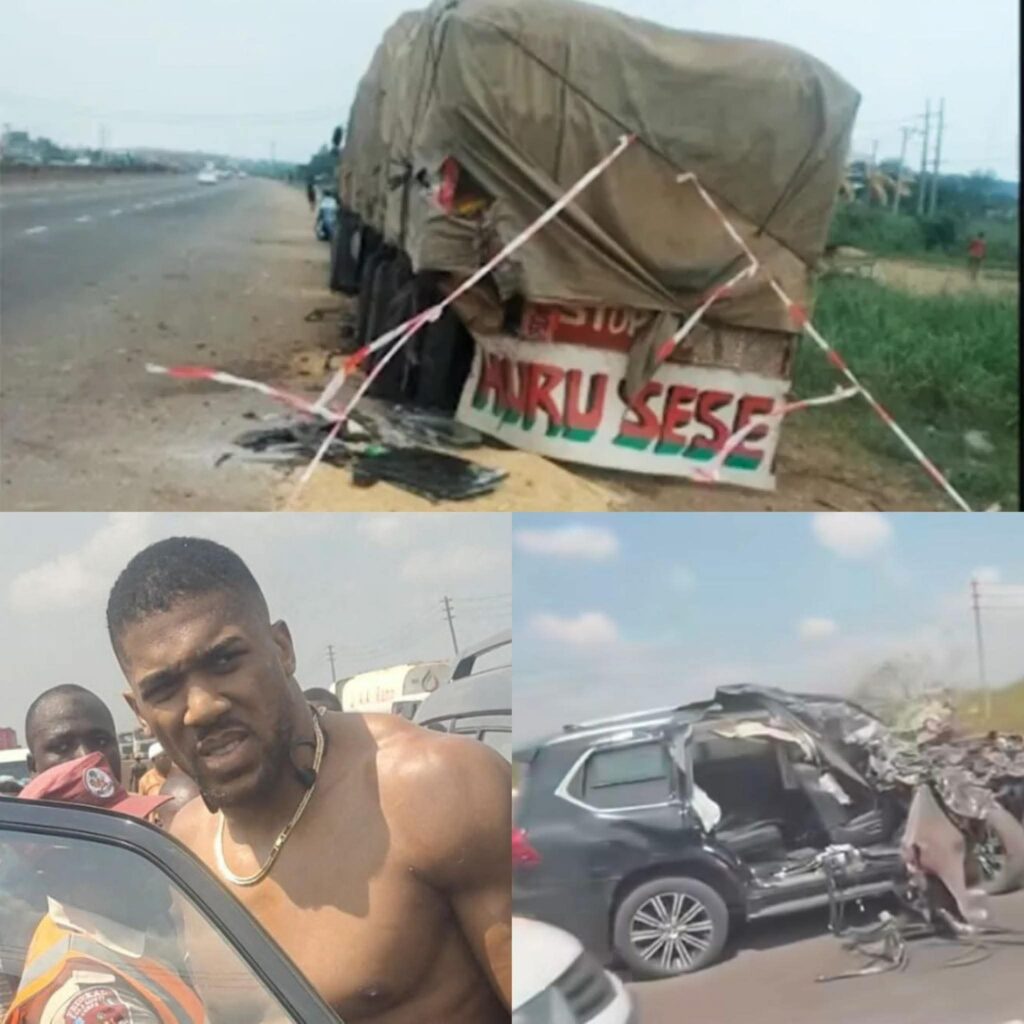
In the case of the Anthony Joshua accident, I can understand the outrage of some members of the public, who are seeking a culprit to blame and feel they have found one in the parked trailer.
However, if you go back and study the video and photographs from the crash scene, you would note that the trailer was parked on the hard shoulder, which is permitted under highway regulations both in Nigeria and abroad.
A hard shoulder is a part of a highway or expressway, separated by a solid white or yellow line or other markings. It is intended for use as an emergency stop for vehicle breakdowns, accidents, or by emergency services.
In their rush to find some way to blame Nigeria, some unpatriotic citizens are trying to blame the authorities for the parked trailer, which was the vehicle that Mr Joshua’s car rammed into.
But much as I regret the accident, the trailer was not the cause of the crash.
A hard shoulder is not a lane, and it is not meant to be used for driving or overtaking vehicles ahead of you. There are warning signs on Nigerian highways reminding drivers not to use the hard shoulder.
The cause of the accident, as the Police and FRSC posited, is overspeeding and reckless overtaking.
That said, hard shoulders are not long-term parking areas, and vehicles should not be left there for extended periods.
What some Nigerians do not understand is that the Federal Road Safety Commission routinely tows away cars parked on the hard shoulder of expressways for long periods. However, it is not so easy when it is a heavy-duty vehicle like a trailer.
This is not just peculiar to Nigeria. Many countries have issues removing parked trailers from the side of freeways. It is expensive and requires specialised equipment.
More often than not, the practice is to cite and fine the owners of such vehicles.
But even then, the trailer itself would not have triggered the accident if Nigerian and international traffic rules had been obeyed.
Reno Omokri
