
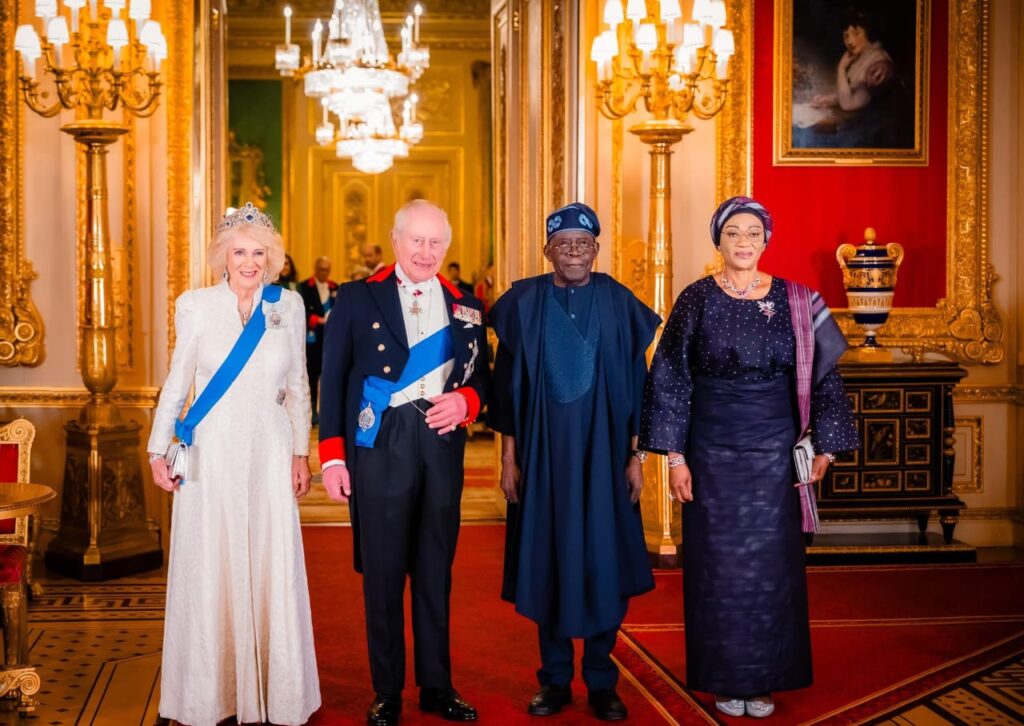
King Charles III has praised the growing influence of Nigerians in the United Kingdom, saying people of Nigerian heritage are now “at the heart of British life” and contributing significantly across multiple sectors.
The monarch made the remarks on Wednesday during a state banquet held at Windsor Castle in honour of Bola Ahmed Tinubu and First Lady Oluremi Tinubu.
Welcoming the Nigerian leader and his wife, King Charles expressed appreciation for their visit during the holy month of Ramadan, extending goodwill and wishing Muslims peace and blessings.
Reflecting on his visits to Nigeria, the King noted the country’s rapid transformation, describing it as a nation driven by youthful energy, ambition and innovation. He said Nigeria’s population — now exceeding 230 million — positions it as a major force in addressing global challenges.
Highlighting the contributions of Nigerians in Britain, the King said individuals of Nigerian descent are excelling in business, technology, academia, law, science, sports, arts and public service.
He added that their impact has enriched British society, citing the growing global appeal of Afrobeats, Nollywood, and Nigerian talent in the English Premier League.
“We are blessed that so many people of Nigerian heritage… are now at the heart of British life,” he said.
King Charles also underscored the strong cultural and economic ties between both countries, describing the relationship as a “living bridge” of more than half a million people connecting Nigeria and the UK. He noted increasing bilateral investments, with Nigerian banks and companies expanding operations in London, while British institutions continue to invest in Nigeria’s infrastructure, education and technology sectors.
According to him, Nigeria recently emerged as the United Kingdom’s largest export market in Africa, with growing trade and travel exchanges between both nations.
On historical relations, the monarch acknowledged that aspects of the shared past between Britain and Nigeria carry painful memories, but stressed the importance of learning from history to build a future rooted in mutual respect and shared prosperity.
He further commended Nigeria’s example of religious coexistence, noting the importance of interfaith harmony and cooperation in addressing security and humanitarian challenges, particularly in Northern Nigeria.
Describing Nigeria as an economic powerhouse and influential diplomatic voice in Africa, King Charles called for deeper collaboration within the Commonwealth, especially in trade, regulatory alignment and job creation.
He concluded by reaffirming the United Kingdom’s commitment to strengthening ties with Nigeria and supporting its role within the Commonwealth, expressing optimism about a shared future built on partnership.
The event ended with a toast to Nigeria and its people, as the King declared in Nigerian parlance: “Naija no dey carry last.”
