
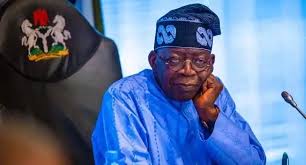
President Bola Tinubu has again ruled out the restoration of petrol subsidy, declaring that the policy has been abolished permanently and accusing opposition politicians promising to bring it back of deceiving Nigerians to secure their votes in the 2027 general elections.
The President, who spoke at the All Progressives Congress (APC) presidential campaign rally at Dutse Township Stadium, Jigawa State, yesterday, insisted that returning to the subsidy regime would deprive the country of resources needed to build new roads, rehabilitate existing infrastructure and finance critical development programmes.
Tinubu, who did not mention any opposition politician by name, accused proponents of subsidy restoration of pursuing personal and political interests rather than the welfare of Nigerians, maintaining that his administration would not reverse a decision it considered necessary for the country’s economic recovery.
“Don’t listen to those who are promising to return fuel subsidy, they’re liars. How do you build more roads? How do you repair the old ones? They don’t have your interest at heart, they only want to take care of their pockets and that of their children,” Tinubu declared.
He reiterated that the removal of petrol subsidy was irreversible, warning Nigerians against accepting campaign promises that could undermine the economic reforms introduced by his administration.
“To those who say subsidy is coming back, it’s a lie. Don’t let them lie to you again. It’s not going to come back,” he said.
The declaration reinforced the position Tinubu had taken at an earlier campaign rally in Kaduna on October 24, where he similarly rejected suggestions that the Federal Government would restore petrol subsidy.
The President maintained that Nigeria could no longer afford to devote substantial public resources to subsidising petrol consumption when the same funds could be invested in infrastructure, education, agriculture and other sectors capable of stimulating economic growth and improving living conditions.
He argued that the country needed to sustain reforms designed to strengthen public finances and expand productive activities rather than return to policies his administration considered economically unsustainable.
Tinubu urged voters to scrutinise the promises of opposition candidates ahead of the elections, insisting that the restoration of petrol subsidy would undermine the government’s ability to finance development projects.
The President’s renewed rejection of subsidy restoration comes amid continuing public debate over the economic consequences of its removal, particularly the sharp increases in transportation costs, food prices and other essential goods and services.
Tinubu announced the end of petrol subsidy during his inauguration on May 29, 2023, a decision that triggered a significant increase in domestic petrol prices and contributed to higher living costs across the country.
Although the administration has consistently defended the policy as necessary to eliminate a substantial fiscal burden and redirect government spending towards development, opposition parties have criticised its impact on household incomes, purchasing power and business operations.
At the Jigawa rally, Tinubu sought to justify the continuation of his economic policies by highlighting infrastructure development, agricultural investment and other programmes his administration intends to pursue if re-elected.
He said additional resources would be channelled into road construction and rehabilitation, maintaining that improved infrastructure was essential to economic growth, trade and the movement of agricultural produce.
The President also promised to intensify efforts to increase food production and reduce prices through mechanised farming, improved access to credit and greater support for agricultural research.
He announced plans to establish six mechanised farming service centres and provide interest-free loans to small-scale farmers, saying the measures would help increase agricultural output, strengthen food security and create employment opportunities.
“Nigeria needs stable power supply and this is what we promise to give Nigerians. Besides, we are set to revive the agricultural sector in order to enhance food security and make food available at cheap prices for all Nigerians,” he said.
Tinubu maintained that his administration would continue investing in electricity, security and other infrastructure necessary to support productive activities, arguing that the benefits of economic reforms would become more evident as ongoing programmes were completed.
He also highlighted the Nigerian Education Loan Fund (NELFUND) and ongoing road and railway projects among the initiatives he said demonstrated the government’s commitment to redirecting public resources towards national development.
The President appealed to Jigawa residents to support his re-election bid and that of Governor Umar Namadi, promising that another four-year mandate would enable both administrations to consolidate ongoing projects.
Vice President Kashim Shettima, who also addressed the rally, urged voters to return Tinubu and Namadi for second terms, while the Director-General of the APC Presidential Campaign Council, Senator Abdulaziz Yari, dismissed allegations that the President was biased against northern Nigeria.
Yari argued that Tinubu deserved the support of northern voters, citing the informal understanding on the rotation of presidential power between the North and South.
Governor Namadi assured the President of the state’s support, pledging to deliver two million votes out of what he described as Jigawa’s 2.3 million registered voters.
The President also virtually commissioned projects executed by the Namadi administration, including agricultural equipment comprising 400 tractors, 60 combine harvesters and 150 seeders, alongside skill acquisition facilities and a 3.5-kilometre dual carriageway leading to the Emir of Dutse’s palace.
With the renewed declaration in Jigawa, Tinubu has placed the future of petrol subsidy at the centre of the 2027 political debate, insisting that the policy will not return regardless of promises by his opponents, even as Nigerians continue to grapple with the economic hardship associated with its removal.
